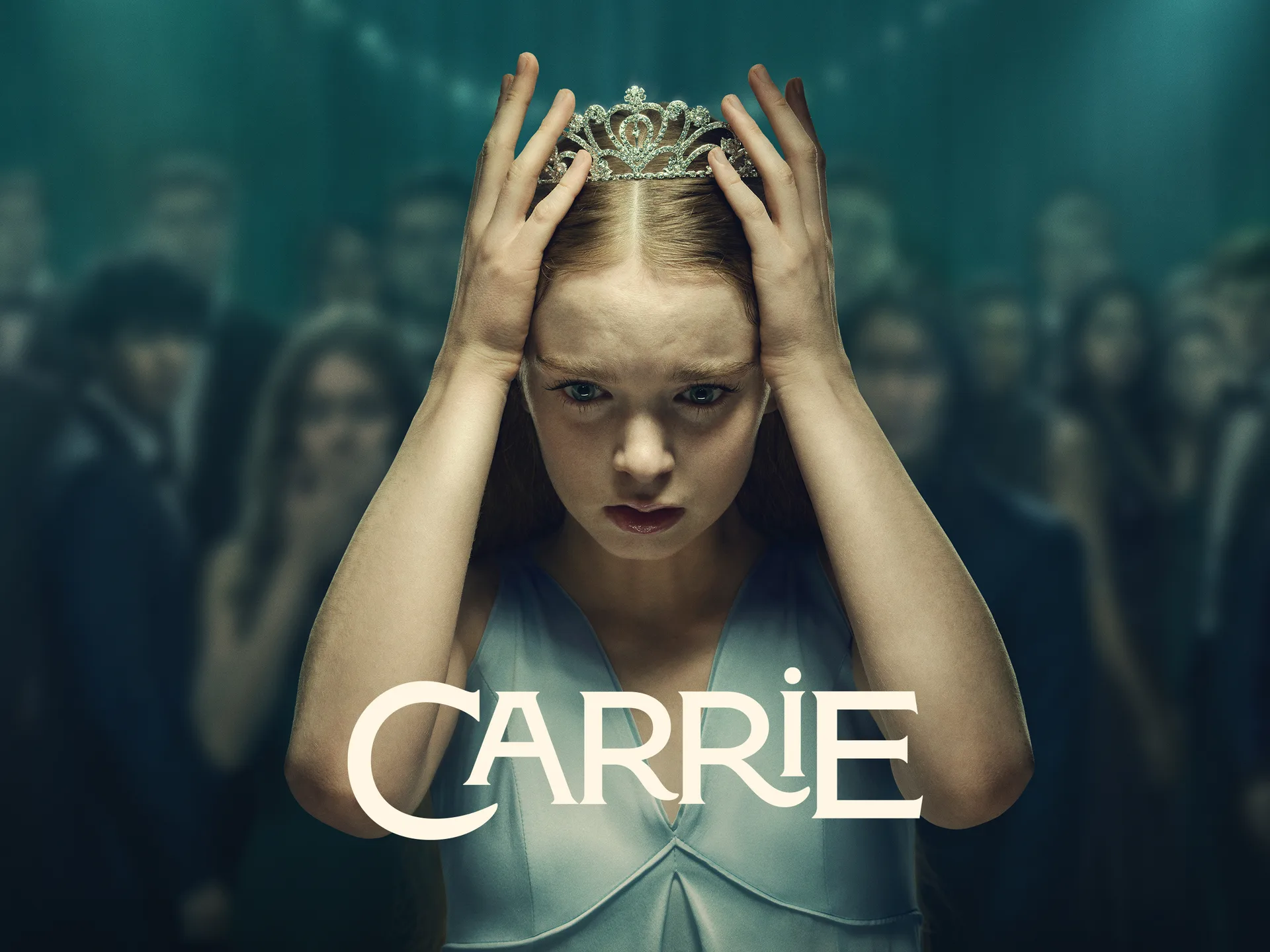
- Summer H. Howell leads the Carrie TV series as Carrie White, the telekinetic teenager at the story's center.
- The series is an 8-episode Prime Video adaptation from creator Mike Flanagan, based on Stephen King's novel.
- Her performance anchors a character-driven psychological horror built on bullying, family control, and repression.
- The show premiered on October 7, 2026 and is available now on Prime Video.
- The serialized format gives Howell far more room to develop Carrie than any film version allowed.
Who Is Summer H. Howell in the Carrie TV series?
Summer H. Howell takes on the defining role of Carrie White in the Carrie TV series, Mike Flanagan's eight-episode adaptation of Stephen King's 1974 novel for Prime Video. As the protagonist, Carrie is a socially isolated teenager whose hostile home life under her deeply religious mother, Margaret, collides with relentless school bullying — and with the awakening of telekinetic abilities she barely understands.
The casting of Howell places the entire emotional weight of the series on a single performer. Carrie appears in nearly every storyline: the family conflict with Margaret, the school dynamics involving Sue Snell and Chris Hargensen, and the supernatural escalation that turns a character study into catastrophe. Flanagan's approach to horror has always depended on grounded, vulnerable central performances, and the Carrie TV series follows that same logic.
In a serialized format, Carrie White is not a symbol glimpsed in fragments — she is a fully developed character whose fear, hope, and anger build across eight episodes. The performer must make the audience believe in both the ordinary teenager and the supernatural force she becomes.
| Aspect | Detail |
|---|---|
| Role | Carrie White, protagonist |
| Series | Carrie (Prime Video, 8 episodes) |
| Creator | Mike Flanagan |
| Source | Stephen King's 1974 novel Carrie |
| Premiere date | October 7, 2026 |
| Genre | Psychological horror, supernatural drama |
How the Series Format Shapes the Character
The Carrie TV series differs from every previous screen version in one fundamental way: time. Film adaptations had roughly 100 minutes to move Carrie from victim to catastrophe. An eight-episode season lets the show slow down and examine how Carrie's isolation is built — day by day, humiliation by humiliation — before her powers fully emerge.
Key structural advantages of the series format:
- Expanded home life: The oppressive relationship between Carrie and Margaret White develops gradually rather than through a handful of scenes.
- A broader community: Teachers, classmates, and townspeople become real characters rather than background figures.
- Gradual power awakening: Telekinesis grows alongside Carrie's emotional pressure, keeping the supernatural grounded in character psychology.
- Sustained tension: Flanagan's signature slow-build horror style depends on the long-form space only a series provides.
Stephen King's novel told its story through multiple viewpoints and documentary-style inserts. The series format is the first screen adaptation with enough room to restore that broader social context around Carrie's experience. Learn more at the official Stephen King page and Mike Flanagan's project page.
Carrie White's Character Arc: Step-by-Step
Carrie's journey across the series follows a clear emotional progression. Understanding this arc explains why the central performance carries so much of the show's impact.
Isolation and Pressure
Carrie is introduced as a withdrawn teenager trapped between a controlling, religiously extreme mother at home and a hostile peer environment at school. Both worlds deny her acceptance.
The Power Awakens
As emotional pressure intensifies, Carrie's telekinetic abilities surface. The series links her power directly to fear, anger, and repression — the more suppressed she is, the stronger the force becomes.
Brief Hope and Belonging
Carrie experiences moments that suggest a normal life may be possible — social inclusion, small acts of kindness, and the first sense of agency over her own identity and abilities.
Escalation and Catastrophe
Humiliation and revenge collide at the story's climax. The accumulated cruelty of home and school erupts through Carrie's power, transforming personal tragedy into public catastrophe.
Tragic Aftermath
The ending reframes the story as both horror and tragedy: Carrie's powers offered escape from helplessness, but never a path to safety or belonging.
Steps 3 through 5 discuss major plot developments. If you have not yet watched the series, treat this arc outline as a post-viewing reference.
Summer H. Howell vs. Previous Carrie Performers
Every screen Carrie has faced the same challenge: making a character who is simultaneously victim, monster, and tragic figure feel like one coherent person. The comparison below situates Howell's version within that lineage.
| Version | Format | Performer Advantage | Horror Expression |
|---|---|---|---|
| Carrie (1976) | Feature film | Iconic lead performance, intense mother-daughter scenes | Visual composition, escalating humiliation |
| Carrie (2002) | TV movie | More exposition room in a television structure | Balanced TV-drama suspense |
| Carrie (2013) | Feature film | Modern effects, updated school culture | CGI-enhanced supernatural horror |
| Carrie TV series (2026) | 8-episode series | Longest screen runtime for the character | Slow-build psychological horror, sustained tension |
Film Carries
- Condensed arc, roughly 100 minutes
- Climax arrives quickly
- Symbol-heavy characterization
TV Movie Carrie
- Moderate pacing
- Modernized relationships
- Accessible drama structure
Series Carrie
- Eight episodes of development
- Deep home-life exploration
- Emotion-driven power growth
If you found earlier film versions too compressed for the character's interior life, the series format directly addresses that limitation — giving Carrie White the screen time the novel always implied she deserved.
Is the Series Worth Watching? A Decision Guide
| Category | Assessment | Best For |
|---|---|---|
| Genre and tone | Psychological horror, coming-of-age drama, supernatural suspense | Slow-burn horror viewers |
| Viewing threshold | Bullying, humiliation, religious extremism, family abuse, intense conflict | Mature audiences |
| Adaptation appeal | Serialized expansion of characters and community | Long-form storytelling fans |
| Stephen King connection | Faithful to core themes of cruelty, repression, and power | King readers |
| Platform | Prime Video, all 8 episodes available | Prime Video subscribers |
The Carrie TV series is streaming exclusively on Prime Video, with all eight episodes available since October 7, 2026. Check the official Prime Video page for regional availability and subtitle options.
Before You Watch:
- Confirm Prime Video availability in your region
- Note the mature content themes (bullying, abuse)
- Decide whether to read the novel first
- Watch the official trailer for tone expectations
- Avoid ending-explained content until finished
FAQ
Q: Who plays Carrie White in the Carrie TV series?
Summer H. Howell stars as Carrie White, the telekinetic protagonist of the Prime Video series. Her role places her at the center of every major storyline, from the family conflict with Margaret White to the school bullying plot involving Sue Snell and Chris Hargensen.
Q: How many episodes are in the Carrie TV series?
The series runs for 8 episodes, all of which premiered on Prime Video on October 7, 2026. The serialized length gives Carrie's character arc far more development space than any previous film adaptation.
Q: Is the Carrie TV series connected to the 1976 or 2013 movies?
No. This is a standalone adaptation of Stephen King's original 1974 novel created by Mike Flanagan for Prime Video. It is not a sequel or remake of the 1976, 2002, or 2013 film versions.
Q: Is the Carrie TV series too intense for casual horror viewers?
The series is character-driven rather than gore-driven, but it contains bullying, public humiliation, religious extremism, and family abuse. It is best suited to mature viewers comfortable with distressing psychological subject matter and slow-building tension.