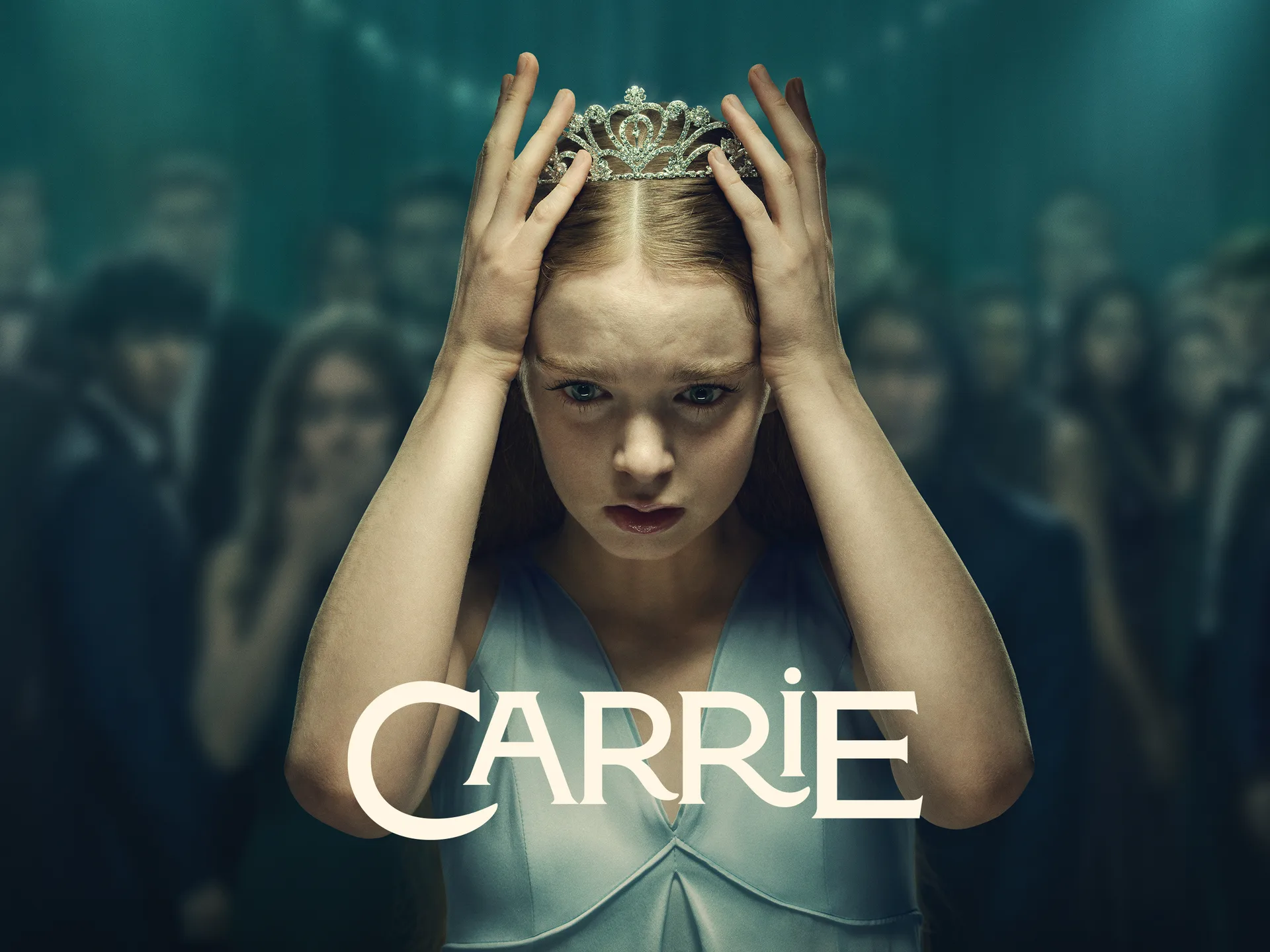
- Carrie TV series soundtrack shapes the psychological horror of Mike Flanagan's 8-episode Prime Video adaptation.
- Music works as emotional storytelling, mirroring Carrie White's repression and telekinetic outbursts.
- The official trailers on Prime Video's YouTube channel preview the series' sonic tone.
- As of October 2026, no full official tracklist has been published; check Prime Video and Amazon MGM Studios press channels.
- Flanagan's projects typically blend original score with curated songs, a pattern worth watching here.
How the Carrie TV Series Soundtrack Shapes the Horror
Sound is one of the most powerful tools in any Mike Flanagan project, and the Carrie TV series soundtrack is no exception. Across its eight episodes on Prime Video, the series uses music to bridge the gap between two worlds: Carrie White's suffocating home life with Margaret, and the hostile social environment of her school. Where visuals show repression, the score often reveals what Carrie cannot say aloud.
Flanagan's approach to horror has always leaned on atmosphere rather than jump scares, and that philosophy extends directly to sound design. In a story built around telekinesis, the moments before Carrie's power erupts matter more than the eruption itself. Expect long, sustained string tones, sudden silences, and low-frequency drones that make ordinary school hallways feel like pressure chambers.
Watch the first episode with quality headphones. Flanagan-driven series often place their most important musical cues in quiet scenes—family dinners, empty corridors—rather than in the obvious horror set pieces.
The series' tonal palette draws from several influences, each serving a different dramatic function:
| Musical Element | Typical Use in the Series | Emotional Effect |
|---|---|---|
| Sustained string drones | Home scenes with Margaret | Oppression, dread, entrapment |
| Distorted choral textures | Telekinesis awakening scenes | Unsettling, supernatural unease |
| Sparse piano motifs | Carrie's private moments | Vulnerability, isolation |
| Abrupt silence | Pre-outburst tension | Anticipation, physical discomfort |
| Retro prom-era songs | School dance sequences | Nostalgia curdling into tragedy |
Because Carrie's story climaxes at a prom, expect period-appropriate dance music to play a deliberately ironic role—warm, romantic sound design set against the story's most devastating turn. That contrast between pleasant music and on-screen catastrophe is a hallmark of the source material's adaptations.
Mike Flanagan's Soundtrack Approach Across His Series
To understand what the Carrie TV series soundtrack likely delivers, look at how Flanagan has used music throughout his television work. His series consistently treat the score as a character in its own right, and his long-standing creative partnership with composing duo The Newton Brothers has produced some of modern TV horror's most recognizable soundscapes.
Character Themes
- Leitmotifs track emotional arcs
- Carrie's theme likely evolves as her power grows
- Quiet motifs return distorted at the climax
Slow-Burn Atmosphere
- Long builds over multiple episodes
- Silence used as deliberately as sound
- Rewards patient, attentive viewing
Curated Songs
- Era-appropriate licensed tracks
- Juxtaposition of warm songs and dark events
- Prom scenes are prime candidates
| Flanagan Signature | How It Applies to Carrie |
|---|---|
| Diegetic music (in-world sources) | School gym speakers, radios, Margaret's hymns at home |
| Religious musical language | Hymn-like chords tied to Margaret's extremism |
| Escalating repetition | Motifs return louder and more dissonant as pressure builds |
| Sound-as-power cues | Telekinetic moments marked by sub-bass and texture shifts |
Flanagan's collaboration with The Newton Brothers spans his major horror series, and his adaptation of Stephen King material has historically leaned heavily on their orchestral-hybrid scoring style. Official credits for the Carrie series should be confirmed on the Prime Video title page and Amazon MGM Studios press materials.
Where to Hear the Music: Trailers, Episodes & Official Channels
If you want to experience the series' sonic identity before committing to all eight episodes, the promotional materials are your best entry point. The official Carrie teaser and official trailer on Prime Video's YouTube channel each compress the series' musical language into a short preview: drones, fragile melodies, and the sound of control beginning to fracture.
Start with the Official Teaser
The teaser is mood-focused and gives the cleanest sample of the score's ambient, tension-first character without story spoilers.
Watch the Full Trailer
The full trailer layers music over key story beats, showing how score and telekinesis visuals are synchronized in the series proper.
Stream the Series on Prime Video
The official Prime Video page hosts all eight episodes with full-quality audio, which matters for low-frequency score cues.
Track Official Soundtrack Announcements
Follow Amazon MGM Studios press releases and Prime Video's social channels for any score album release, since soundtrack availability is announced there rather than on fan sites.
Full soundtrack rips uploaded to third-party platforms often mislabel cues, mix in fan edits, or use music from the 1976 and 2013 films. Verify any track against official credits before treating it as part of the series score.
Soundtrack vs. Earlier Carrie Adaptations
Every screen version of Stephen King's novel has used music differently, and comparing them highlights what makes the TV series' approach distinct.
| Adaptation | Format | Musical Identity | Soundtrack Legacy |
|---|---|---|---|
| Carrie (1976) | Feature film | Pino Donaggio's lush orchestral score | One of horror's most famous prom sequences, score-driven |
| Carrie (2002) | TV film | Conventional TV-drama scoring | Functional, limited cultural footprint |
| Carrie (2013) | Feature film | Modern hybrid score plus pop tracks | Contemporary song placement at the prom |
| Carrie TV series (2026) | 8-episode series | Serialized scoring across long-form arcs | Room for evolving themes per episode |
The key advantage of the television format is time. A two-hour film must state its themes quickly; eight episodes allow motifs to grow with Carrie herself. A melody that begins as a timid piano figure in early episodes can return—darker, louder, and layered with distortion—during the prom night climax, making the Carrie TV series soundtrack a structural part of the tragedy rather than accompaniment.
On a second viewing, track one recurring motif across episodes. Flanagan's series typically reward this: the same few notes often mean something different each time they appear.
Your Soundtrack Listening Checklist
How to Experience the Carrie Score Fully:
- Watch the official teaser and trailer on Prime Video's YouTube channel
- Stream all 8 episodes on Prime Video with headphones or a soundbar
- Note recurring motifs tied to Carrie, Margaret, and the school
- Compare the prom sequence's music with the 1976 film version
- Follow Amazon MGM Studios press channels for score album news
FAQ
Q: Is there an official Carrie TV series soundtrack album?
As of October 2026, no full official tracklist or album release for the Carrie TV series soundtrack has been confirmed. Watch the Prime Video title page and Amazon MGM Studios press releases for announcements, as score releases for streaming series are often revealed after the show premieres.
Q: Who composed the music for the Carrie TV series?
Mike Flanagan's television projects have consistently featured his longtime composing collaborators, The Newton Brothers, but always verify composer credits on the official Prime Video page for the series rather than relying on fan-uploaded sources.
Q: Where can I hear the Carrie TV series music?
The official teaser and trailer on Prime Video's YouTube channel preview the series' sound, and all eight episodes stream on Prime Video. Avoid unofficial rips, which frequently mix in music from the 1976 and 2013 film adaptations.
Q: How is the Carrie TV series soundtrack different from the 1976 film?
The 1976 film used a single lush orchestral score compressed into a two-hour runtime. The TV series spans eight episodes, allowing themes to evolve gradually alongside Carrie White's character arc, her home conflict with Margaret, and the awakening of her telekinetic powers.