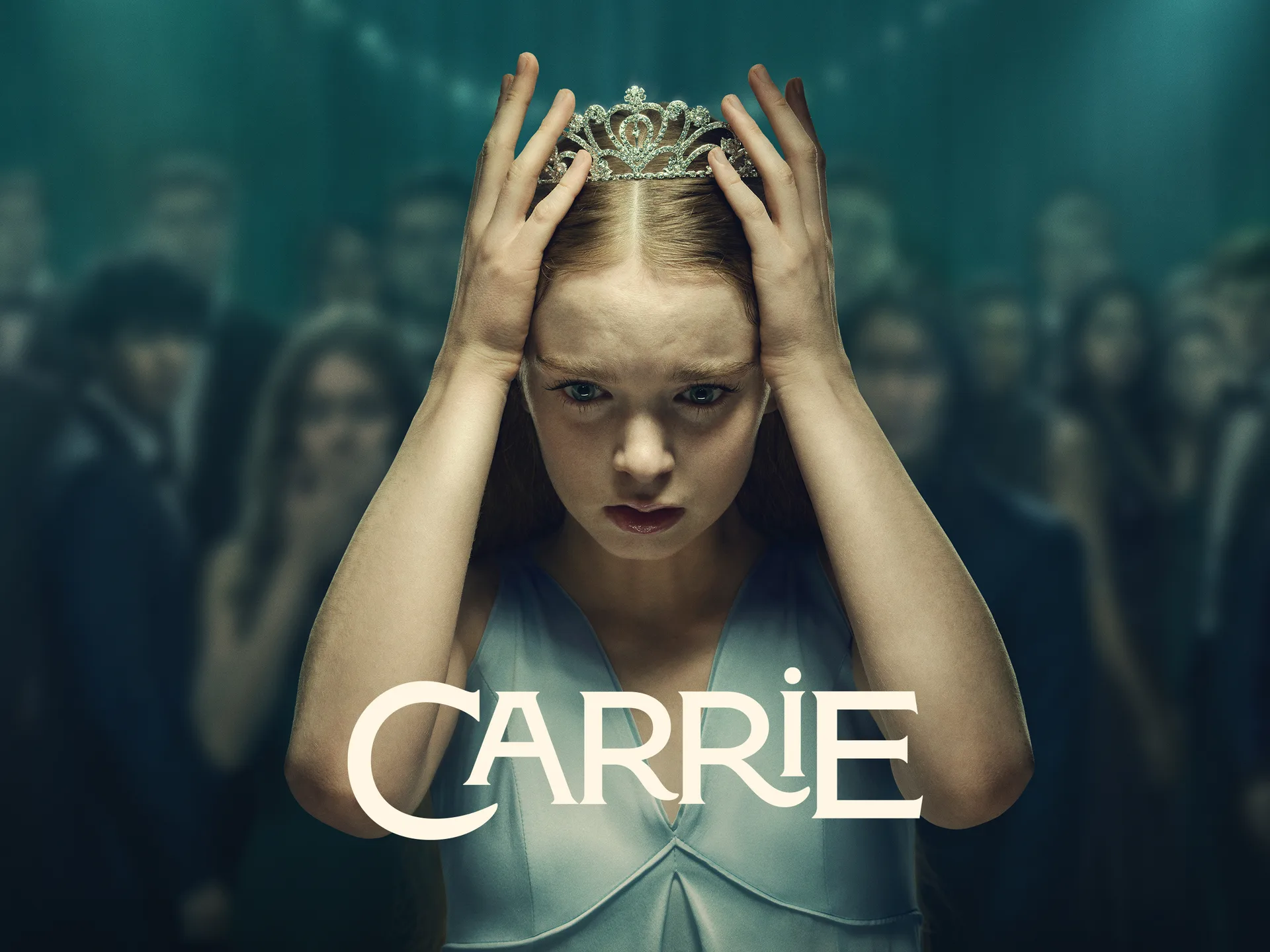
- Carrie TV series Mike Flanagan brings Stephen King's debut novel to Prime Video as an 8-episode limited series, released October 7, 2026.
- Flanagan's approach favors character-driven psychological horror over jump scares and gore-heavy spectacle.
- The series expands Carrie White's family, school, and community arcs across serialized long-form storytelling.
- Telekinesis functions as both a supernatural threat and a metaphor for repressed adolescent emotion.
- Compare this version directly with the 1976, 2002, and 2013 adaptations before choosing where to start.
Carrie TV series Mike Flanagan: Overview and Vision
The Carrie TV series Mike Flanagan created for Prime Video is a serialized adaptation of Stephen King's 1974 debut novel, consisting of 8 episodes that premiered on October 7, 2026. Flanagan, who previously helmed acclaimed horror projects like The Haunting of Hill House and Midnight Mass, approaches Carrie not as a monster story but as a slow-building tragedy about bullying, religious repression, and a girl whose telekinetic power awakens under unbearable pressure.
Video Highlights:
- Official trailer introduces Carrie White, her home life, and her awakening powers
- Establishes the psychological-horror tone over conventional scares
- Highlights the school environment and prom-night escalation
- Confirms Prime Video as the exclusive streaming home
Flanagan's involvement signals a specific kind of adaptation: one where the supernatural element stays grounded in character psychology. His official project page documents the series as part of a career focused on emotionally driven horror, and Stephen King's own site lists the series among authorized television adaptations of his work. For Prime Video, the series represents a marquee collaboration between Amazon MGM Studios and one of television's most recognizable horror auteurs.
Use the Prime Video Carrie page for viewing access, Stephen King's official Carrie page for source-material context, and Mike Flanagan's project page for creator background.
| Series Fact | Detail |
|---|---|
| Format | Limited series, 8 episodes |
| Platform | Prime Video (Amazon MGM Studios) |
| Release date | October 7, 2026 |
| Creator | Mike Flanagan |
| Source material | Stephen King's 1974 novel Carrie |
| Genre | Psychological horror, coming-of-age drama |
Why Mike Flanagan's Approach Changes the Story
Flanagan's adaptation philosophy matters because Carrie has always been a compressed story. The novel is short, told through fragments and documentary-style interludes, and previous film versions condensed it into roughly 100 minutes. A television format fundamentally alters what the story can hold.
Expanded Character Time
- Eight episodes allow Carrie, Margaret, Sue, and classmates to develop gradually
- Motivations get screen time instead of shorthand
- The community becomes a character itself
Sustained Dread
- Flanagan builds slow-escalating tension rather than a single climactic payoff
- Horror emerges from domestic and social pressure
- Telekinesis ties directly to emotional repression
Thematic Depth
- Bullying, religious extremism, and family abuse examined as interlocking systems
- The prom disaster becomes a consequence, not a surprise
- Tragedy framing replaces pure spectacle
The series contains bullying, public humiliation, religious extremism, family abuse, and emotionally intense conflict. Its heaviest material is rooted in sustained psychological pressure rather than constant graphic violence—approach it as mature, character-centered horror.
Adaptation Comparison: TV Series vs. Novel and Films
Each screen version of Carrie emphasizes different parts of King's source material. The table below separates the major versions so you can choose the right entry point.
| Adaptation | Format | Story Focus | Horror Style | Best For |
|---|---|---|---|---|
| 1974 novel | Novel | Carrie's life told through multi-viewpoint fragments and documents | Internal fear, social realism, supernatural escalation | Readers wanting the original structure |
| Carrie (1976) | Feature film | Condensed coming-of-age horror | Performance-driven suspense, iconic prom sequence | Classic-film fans |
| Carrie (2002) | TV film | Modernized retelling with more exposition | TV-drama structure with supernatural suspense | Casual viewers |
| Carrie (2013) | Feature film | Contemporary school culture and visibility | Modern effects plus psychological horror | Modern-film audiences |
| Flanagan TV series (2026) | 8-episode series | Expanded world, deeper relationships, gradual escalation | Sustained tension, character-first horror | Long-form and King-adaptation fans |
A second comparison shows how the series format changes specific storytelling dimensions:
| Dimension | Feature Films | Flanagan TV Series |
|---|---|---|
| Pacing | Compressed, single-night climax emphasis | Gradual escalation across 8 episodes |
| Character arcs | Efficient shorthand | Extended development and motivation |
| Community scope | Minimal beyond key classmates | Broader town and school context |
| Telekinesis | Climactic set-piece | Ongoing thread tied to emotional state |
| Themes | Implied through imagery | Explicitly examined across episodes |
Newcomers can start with the TV series on Prime Video, then read the 1974 novel for the original documentary-style structure, and finish with the 1976 film to see the most influential screen interpretation.
Key Characters and the Ensemble
The story's power comes from its central relationships. Carrie White stands at the center, while her mother, classmates, and teachers shape the pressures that drive the narrative.
| Character | Role | Story Function |
|---|---|---|
| Carrie White | Protagonist | Isolated teen whose telekinesis awakens under pressure; embodies themes of repression and cruelty |
| Margaret White | Carrie's mother | Religious extremist whose control shapes Carrie's fear, guilt, and identity |
| Sue Snell | Classmate | Contrasting perspective on guilt, empathy, and attempted amends |
| Chris Hargensen | Antagonistic classmate | Represents deliberate bullying and the destructive escalation of humiliation |
Carrie's Isolation Intensifies
Home and school conflicts establish opposing but connected pressure sources, with the supernatural element introduced inside a grounded character drama.
The Power Emerges
As emotional pressure builds, the series links Carrie's fear and anger to her telekinetic ability, making the power central to escalating tension.
Confrontation and Climax
School-based humiliation collides with family conflict, bringing the supernatural and social storylines together in a single catastrophic turning point.
Aftermath and Meaning
The ending reframes the events as both supernatural horror and preventable tragedy, critiquing bullying, repression, and institutional failure.
Casting a younger actress like Summer H. Howell as Carrie aligns the character with King's original teenage protagonist, reinforcing the coming-of-age framing that anchors the series' emotional weight.
Viewer Decision Guide: Is the Series Worth Watching?
| Category | Spoiler-Free Assessment | Recommended For |
|---|---|---|
| Genre and tone | Psychological horror, coming-of-age drama, supernatural suspense | Viewers who enjoy slow-building, character-centered horror |
| Viewing threshold | Bullying, humiliation, religious extremism, family abuse | Mature audiences comfortable with distressing themes |
| Adaptation appeal | Serialized format expands relationships and community scope | Long-form adaptation fans |
| Stephen King connection | Retains core themes of adolescence, cruelty, and power | King readers exploring TV adaptations |
| Platform access | Prime Video listing with regional availability | Practical watch decisions |
Watch the first two episodes before reading any ending-explained content. The series' pacing rewards going in cold; save episode-by-episode recaps for after each viewing session.
Before You Finish the Series:
- Watch the official trailer for tone calibration
- Confirm Prime Video availability in your region
- Note the telekinesis-and-emotion connection as it develops
- Track how Margaret's control escalates across episodes
- Compare the finale against the 1976 film's ending
FAQ
Q: What is the Carrie TV series Mike Flanagan created about?
It is an 8-episode Prime Video limited series adapting Stephen King's novel about Carrie White, a socially isolated teenager whose telekinetic abilities emerge amid bullying and an oppressive religious home life. It premiered October 7, 2026.
Q: How does the TV series differ from the Carrie movies?
The serialized format gives characters, relationships, and the community far more development time than a feature film. Flanagan's version builds sustained psychological tension across episodes rather than compressing the story into a single climactic night.
Q: Where can I watch the Carrie TV series?
The series streams on Prime Video. Check the official Prime Video Carrie page for current regional availability and subscription requirements.
Q: Is Flanagan's version scarier than the novel or films?
The horror is more psychological than graphic. Flanagan emphasizes emotional repression, domestic control, and social cruelty as the engines of dread, with telekinesis functioning as a metaphor for suppressed anger rather than pure spectacle.