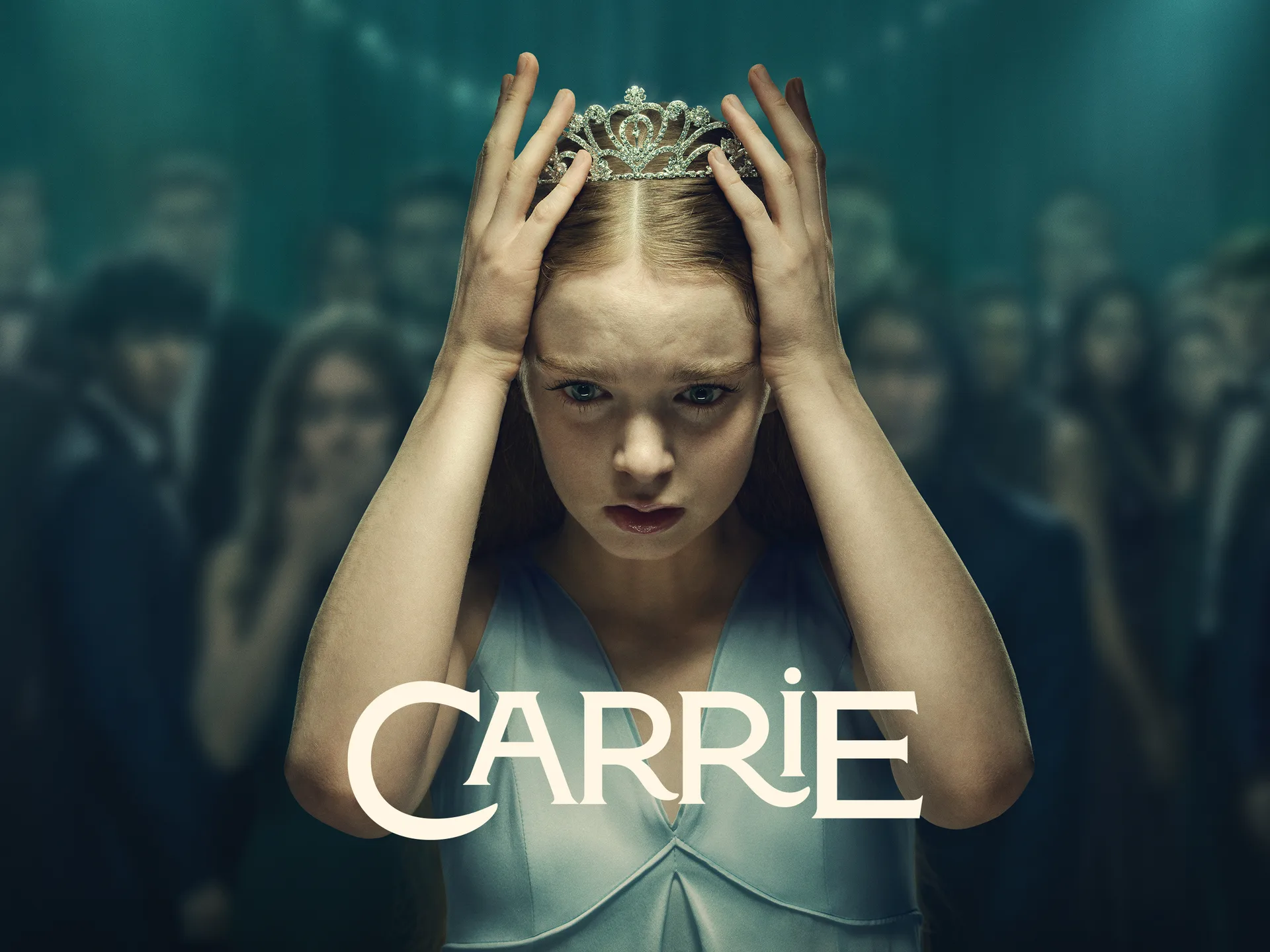
- Carrie TV series director: Mike Flanagan leads the Prime Video adaptation as showrunner and executive producer.
- Format: An 8-episode limited series released October 7, 2026 on Prime Video.
- Source material: Based on Stephen King's 1974 novel, adapted for serialized television.
- Flanagan's approach: Character-driven horror, slow-building tension, emotional realism over jump scares.
- Where to verify: Check the official Prime Video page and Mike Flanagan's project site.
Who Is the Carrie TV Series Director?
The Carrie TV series director and creative lead is Mike Flanagan, the filmmaker behind some of the most acclaimed horror series of the streaming era. Flanagan developed and executive produced the adaptation of Stephen King's debut novel for Prime Video, with the eight-episode season arriving on October 7, 2026. His involvement signals a specific kind of adaptation: intimate, psychological, and centered on character long before it escalates into supernatural catastrophe.
Flanagan's official project page documents his role in the production, and Prime Video's official listing confirms the series presentation. For a first look at his take on Carrie White's story, the official trailer captures the tone he brings to the material.
Video Highlights:
- Introduces Carrie White and the show's central conflicts
- Establishes the psychological-horror tone of the adaptation
- Teases the awakening of Carrie's telekinetic powers
- Showcases Flanagan's signature slow-burn atmosphere
Flanagan's adaptations are known for expanding source material with deep interiority. Expect the series to explore Carrie's home life, her classmates' motivations, and the community around her in ways a two-hour film cannot.
Mike Flanagan's Directing Style and Horror Philosophy
Flanagan has built a career on horror that prioritizes grief, addiction, family trauma, and emotional repression over conventional scares. His stories typically follow vulnerable characters whose psychological pain manifests through the supernatural. This makes him an unusually strong match for Carrie, a story where telekinesis is essentially a metaphor for suppressed emotion.
| Style Element | How It Appears in His Work | What It Means for Carrie |
|---|---|---|
| Slow-burn pacing | Tension builds across full seasons | Carrie's isolation develops in depth over 8 episodes |
| Character-first horror | Supernatural reflects inner pain | Telekinesis tied to repression and humiliation |
| Family drama core | Families are the central horror unit | Margaret and Carrie's relationship gets full treatment |
| Ensemble depth | Side characters get full arcs | Sue, Chris, and classmates gain expanded perspectives |
| Tragic framing | Horror blended with genuine tragedy | The climax lands as catastrophe, not spectacle |
Flanagan belongs to a small group of showrunner-directors whose name alone defines audience expectations. Viewers familiar with his previous Netflix horror series will recognize the structure: grounded human drama first, escalating supernatural dread second.
How Flanagan Adapts Stephen King
Flanagan is one of Stephen King's most trusted adapters in modern television. His approach balances fidelity to theme with the freedom to restructure narrative for the long-form format.
| Adaptation Principle | Description | Effect on the Series |
|---|---|---|
| Preserve King's themes | Cruelty, shame, power, and consequence stay central | The novel's moral weight is retained |
| Expand secondary characters | Minor figures become fully realized | Classmates and townspeople gain depth |
| Serialize the escalation | Slow buildup instead of a single night of horror | More room for dread across 8 episodes |
| Modernize context | Contemporary school and social dynamics | Bullying reflects today's environment |
| Ground the supernatural | Powers obey emotional logic | Telekinesis feels earned, not arbitrary |
A limited-series format gives Flanagan what no film version had: time. Where the 1976 film compressed the story, the series can trace the long pattern of cruelty that makes the ending inevitable.
The Director's Key Collaborators and Roles
Understanding the production structure helps clarify how the Carrie TV series director's vision reaches the screen. Flanagan does not work alone; the series sits within Amazon MGM Studios' production framework.
Mike Flanagan
- Showrunner / Director
- Series developer
- Executive producer
- Sets tone, pacing, visual language
Amazon MGM Studios
- Production studio
- Prime Video distribution
- Marketing and release strategy
Stephen King
- Source author
- Original 1974 novel
- Thematic foundation
- Official page hosted on stephenking.com
Development
Flanagan develops the adaptation, shaping the novel into an eight-episode serialized structure with expanded character arcs.
Production
Amazon MGM Studios produces the series under Flanagan's creative leadership, with his established collaborators handling craft departments.
Release
All 8 episodes launch on Prime Video on October 7, 2026, accompanied by official trailers and press materials.
Reception
Critics and audiences evaluate the adaptation against the novel, the 1976 classic, and Flanagan's previous horror series.
Do not mix up this series with the 1976 film by Brian De Palma, the 2002 television film, or the 2013 remake. The 2026 Prime Video series is Flanagan's serialized adaptation — a distinct project with its own creative direction.
How the Director's Vision Shapes the Story
Flanagan's direction redefines where the horror lives in Carrie's story. Rather than treating prom night as the whole point, his series format distributes dread across the entire community.
| Story Element | Flanagan's Treatment | Why It Matters |
|---|---|---|
| Carrie's isolation | Extended, intimate exploration | Audience understands the accumulation of harm |
| Margaret's control | Full family-drama depth | Religious extremism gets real context |
| Classmates' choices | Individual motivations examined | Bullying is shown as decisions, not background |
| Telekinesis | Grows with emotional pressure | Power feels like character, not effect |
| The climax | Tragic convergence | Lands as consequence, not spectacle |
What to Watch For in the Director's Approach:
- How family scenes are staged as psychological horror
- The pacing of Carrie's power awakening across episodes
- Expanded perspectives on Sue Snell and Chris Hargensen
- Visual motifs linking repression and supernatural force
- How the ending reframes the story as tragedy
New viewers should approach the series as a character drama with horror elements, not a jump-scare fest. Flanagan rewards patience; the dread compounds episode by episode.
FAQ
Q: Who is the Carrie TV series director?
Mike Flanagan serves as the series' creative lead, developing and executive producing the eight-episode Prime Video adaptation of Stephen King's novel, which premiered October 7, 2026.
Q: How is the TV series different from the Carrie movies?
Unlike the 1976, 2002, and 2013 films, Flanagan's version is serialized across 8 episodes, allowing deeper exploration of Carrie White's home life, her classmates' motivations, and the community dynamics that build toward the tragedy.
Q: What is Mike Flanagan known for as a director?
Flanagan is known for character-driven psychological horror on television, blending family drama with supernatural elements, and for faithful yet inventive adaptations of Stephen King's work in long-form formats.
Q: Where can I watch the Carrie TV series?
The series streams on Prime Video. Check the official Prime Video title page for regional availability and current viewing options.