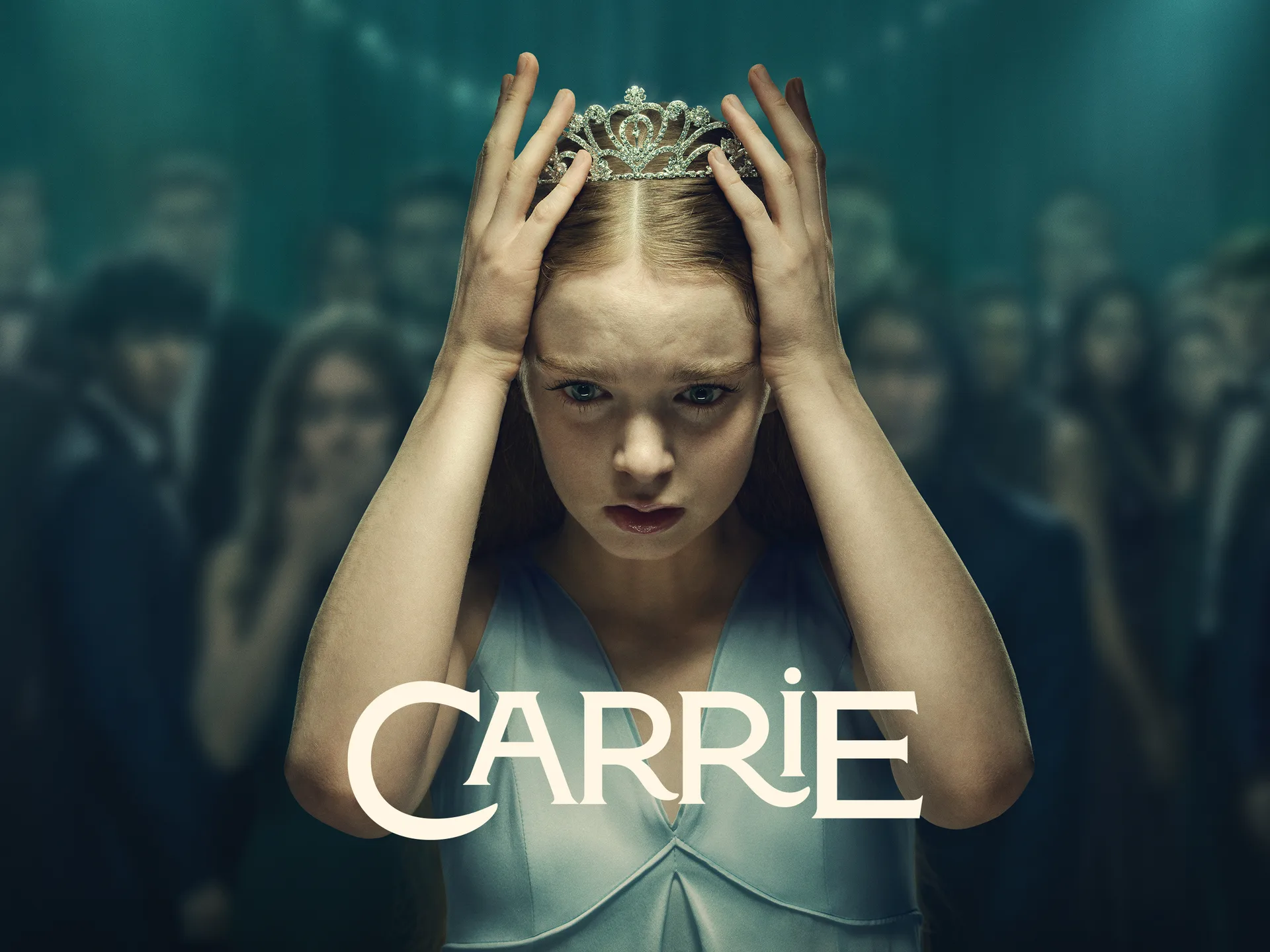
- Carrie TV series rating verdict: a character-driven horror drama best for mature audiences.
- Genre mix: psychological horror, coming-of-age drama, and supernatural suspense across 8 episodes.
- Viewing threshold: contains bullying, family abuse, religious extremism, and emotional intensity.
- Best fit: Stephen King readers and fans of Mike Flanagan's slow-building, character-focused horror.
- Where to watch: streaming on Prime Video since October 7, 2026.
Carrie TV Series Rating Overview
The Carrie TV series rating conversation starts with what the show actually is: not a conventional monster-of-the-week horror, but a serialized adaptation of Stephen King's 1974 novel developed by Mike Flanagan for Prime Video. All 8 episodes released on October 7, 2026, giving the story far more room than any single film version ever had.
Because the series premiered very recently, formal critical aggregates are still settling. What can be rated confidently right now is the show's shape: its tone, its adaptation strategy, its intensity level, and who it suits. This guide breaks down each of those dimensions so you can form your own verdict before committing eight hours.
| Rating Dimension | Assessment | Notes |
|---|---|---|
| Atmosphere and tension | ★★★★☆ | Slow-building, dread-focused rather than jump-scare heavy |
| Character development | ★★★★★ | 8-episode format allows deep arcs for Carrie, Margaret, classmates |
| Faithfulness to King's themes | ★★★★☆ | Retains bullying, repression, family abuse, telekinesis core |
| Emotional intensity | ★★★★★ | Distressing subject matter throughout |
| Accessibility for casual viewers | ★★★☆☆ | Requires patience with deliberate pacing |
Judge the series as a tragedy first and a horror story second. Viewers who rate it purely on scares tend to undervalue its strongest element: sustained psychological pressure.
How We Rate the Series: Five Criteria
A fair Carrie TV series rating needs consistent criteria. We evaluate the show across five weighted dimensions, all drawn from what the adaptation explicitly emphasizes: character drama, supernatural escalation, thematic depth, viewing threshold, and adaptation value.
Character Drama
- Weight: High
- Carrie White's isolation drives every episode
- Margaret White's control shapes the horror
- Classmates get real arcs, not caricatures
Supernatural Horror
- Weight: Medium-High
- Telekinesis tied to emotional repression
- Escalation built across the season
- Less gore-driven than expected
Adaptation Value
- Weight: High
- Serialized format expands the community
- Deeper look at causes of Carrie's isolation
- Long-form alternative to the 1976 classic
The series contains sustained depictions of bullying, public humiliation, religious extremism, and family abuse. Its most difficult material is psychological rather than constantly graphic, but the emotional weight is heavy across all eight episodes.
Spoiler-Free Rating Breakdown
Genre and Tone
The series blends psychological horror, coming-of-age drama, family conflict, and supernatural suspense. The horror emerges from the interaction between social cruelty, emotional repression, domestic control, and telekinetic power rather than from external threats.
Adaptation Appeal
The television format creates room for expanded character relationships, a broader community setting, and gradual suspense. A serialized structure can examine the causes and consequences of Carrie's isolation in greater detail than a single feature-length adaptation ever could.
| Aspect | TV Series (2026) | 1976 Film | 2013 Film |
|---|---|---|---|
| Format | 8-episode series | Feature film | Feature film |
| Pacing | Slow, layered build | Condensed escalation | Modern, effects-forward |
| Character depth | Deepest across cast | Strong leads | Moderate |
| Horror style | Psychological dread | Suspense classic | Supernatural spectacle |
| Best for | Long-form viewers | Classic horror fans | Casual movie nights |
The Stephen King Connection
The series is built around one of King's most recognizable stories and retains the central themes of adolescence, cruelty, family pressure, and supernatural power. The core appeal lies in how ordinary social experiences become part of a larger tragic horror framework.
If you value thematic faithfulness and reinterpretation over scene-for-scene replication, the series rewards your time. It treats the novel's ideas seriously rather than mining it for set pieces.
Deciding Whether to Watch: Step-by-Step
Use this decision flow to reach your own Carrie TV series rating before pressing play.
Check Your Horror Preferences
If you prefer slow-building, character-centered horror over constant jump scares, the series aligns with your taste. Flanagan's approach prioritizes dread and emotional escalation.
Assess Your Content Threshold
Confirm you are comfortable with bullying, humiliation, religious extremism, and family abuse as recurring themes. These are structural to the story, not incidental.
Consider Your King Familiarity
Prior knowledge of the novel or earlier films enriches the experience but is not required. The series stands on its own while rewarding longtime fans.
Verify Platform Access
Confirm Prime Video availability in your region, including subscription requirements and whether subtitles or dubbing options meet your needs.
Start With the Official Trailer
Watch the official promotional materials on Prime Video's channels to sample the tone before committing to episode one.
All eight episodes released simultaneously on October 7, 2026, so both binge viewing and slower weekly pacing work. Slower pacing softens the emotional intensity of the back half.
Who Should Watch: Audience Fit Ratings
| Viewer Type | Fit Rating | Reasoning |
|---|---|---|
| Mike Flanagan fans | ★★★★★ | His signature character-focused horror throughout |
| Stephen King readers | ★★★★☆ | Thematically faithful long-form adaptation |
| Slow-burn horror viewers | ★★★★★ | Tension builds deliberately across episodes |
| Jump-scare seekers | ★★☆☆☆ | Dread-focused, not scare-per-minute |
| Younger audiences | ★☆☆☆☆ | Mature themes and heavy emotional content |
Before You Rate the Series:
- Watch at least the first three episodes before judging pacing
- Note how telekinesis links to Carrie's emotional state
- Compare the Margaret relationship to earlier adaptations
- Decide whether the ending lands as tragedy or horror for you
- Revisit the trailer to see how tone was signaled
Rate the series after finishing all eight episodes. Its structure rewards cumulative viewing, and mid-season episodes deliberately withhold payoff that lands in the finale.
FAQ
Q: Is the Carrie TV series worth watching?
For viewers who enjoy character-driven psychological horror, Stephen King adaptations, and Mike Flanagan's slow-building style, yes. If you prefer fast-paced scare-driven horror, the deliberate pacing may test your patience.
Q: How does the Carrie TV series rating compare to the 1976 film?
The series offers deeper character development across eight episodes, while the 1976 film remains the most influential condensed interpretation. The TV format better explores the causes of Carrie's isolation, but classic-film fans may find the pacing slower.
Q: Is the Carrie TV series scary?
It is psychologically intense rather than constantly frightening. The horror comes from bullying, family abuse, and emotional repression converging with telekinesis, producing sustained dread instead of frequent jump scares.
Q: Do I need to read the book or watch the movies first?
No. The series works as a standalone story, though familiarity with Stephen King's novel or the earlier film adaptations adds context and makes the adaptation choices more rewarding.