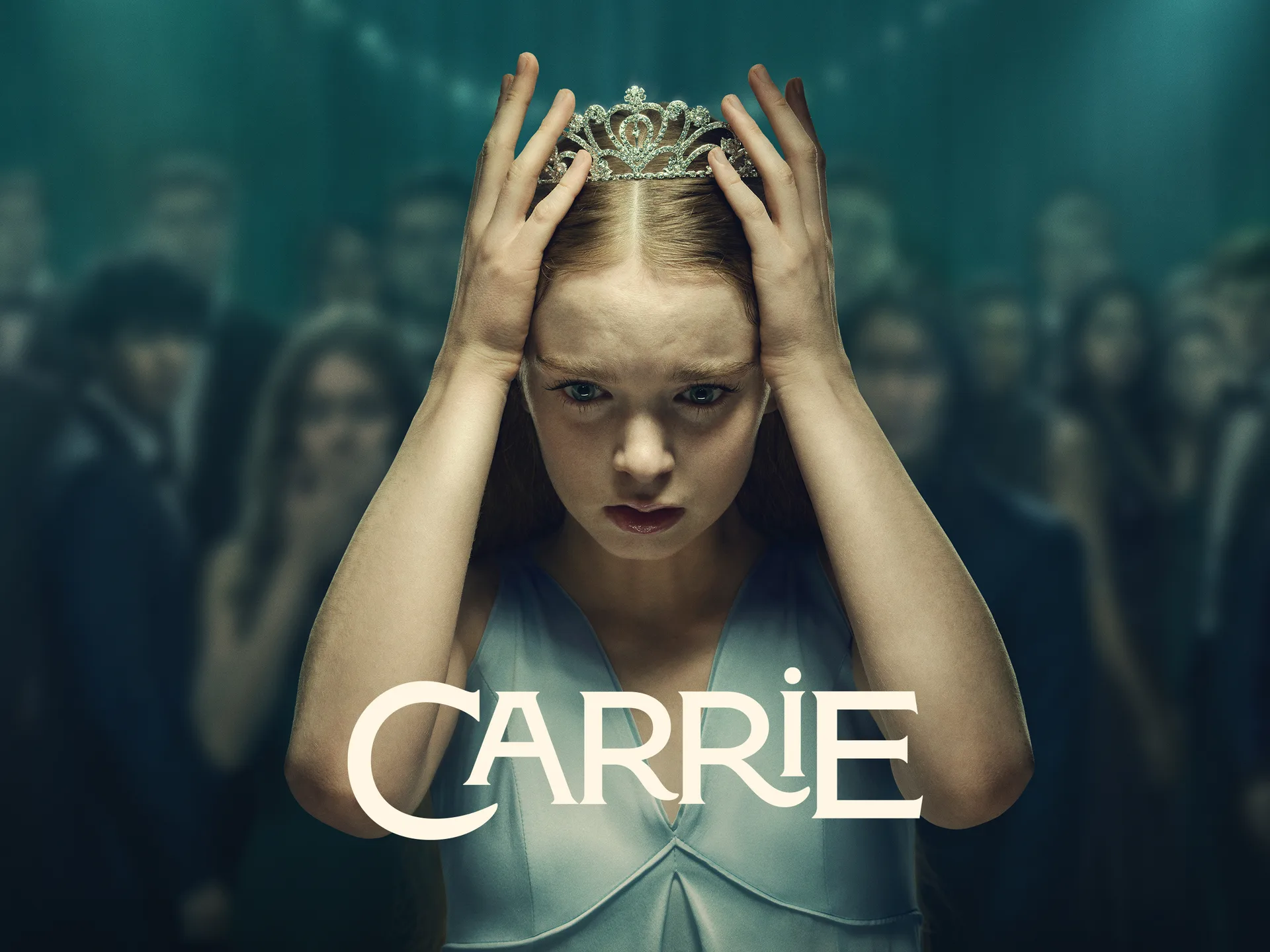
- Carrie TV series characters: Carrie White, Margaret White, Sue Snell, and Chris Hargensen anchor the drama.
- Core conflict: Bullying at school and religious control at home push Carrie toward her telekinetic awakening.
- Format advantage: Eight episodes on Prime Video allow deeper character development than any film version.
- Creator vision: Mike Flanagan adapts Stephen King's novel with a character-first horror approach.
- Spoiler control: This guide keeps major plot reveals minimal and clearly labeled.
Carrie TV Series Characters: Overview
The Carrie TV series character roster turns Stephen King's compact 1974 novel into an eight-episode psychological horror drama for Prime Video, released October 7, 2026. Where earlier film adaptations had roughly 100 minutes to sketch their casts, showrunner Mike Flanagan uses the serialized format to give Carrie White, her mother Margaret, and her classmates fuller arcs and clearer motivations. Every character in the series exists to apply, relieve, or witness the pressure that builds around Carrie.
Video Highlights:
- Official trailer introduces Carrie White and her isolated daily life
- Telekinetic power teased through escalating emotional moments
- Margaret White's control over the household is established early
- Prom-night imagery signals the story's tragic climax
The character map below covers the core cast of the series.
| Character | Role | Primary Source of Conflict | Story Function |
|---|---|---|---|
| Carrie White | Protagonist | Home and school pressure | Emotional and supernatural center |
| Margaret White | Carrie's mother | Religious extremism | Oppressive force at home |
| Sue Snell | Classmate | Guilt over peer cruelty | Empathy and attempted amends |
| Chris Hargensen | Antagonistic classmate | Deliberate bullying | Escalation engine of the plot |
Watch the first two episodes closely before forming opinions on any character. The series deliberately builds sympathy and blame gradually, and early judgments often reverse by mid-season.
Carrie White: The Protagonist
Carrie White is a socially isolated teenager whose difficult home life and hostile school environment collide with the discovery of her telekinetic abilities. The series frames her as a character study first and a horror figure second: her struggle for acceptance, autonomy, and control forms both the emotional core and the supernatural engine of the story.
Character profile:
| Trait | Description |
|---|---|
| Identity | Withdrawn high-school student |
| Family | Single mother, Margaret White, deeply religious and controlling |
| Ability | Telekinesis linked to emotional state |
| Core struggle | Acceptance, identity, and control under sustained cruelty |
| Thematic role | Embodies repression, bullying, power, and consequence |
Carrie's arc involves bullying, public humiliation, and family abuse. The horror intensity builds from sustained psychological pressure rather than constant graphic violence, but the emotional weight is significant throughout.
Supporting Characters and Motivations
Margaret White
- Role: Carrie's mother
- Deeply religious and controlling
- Shapes Carrie's fear, guilt, and identity
- Represents oppressive home life
Sue Snell
- Role: Classmate
- Connects school dynamics to Carrie's fate
- Offers perspective on guilt and empathy
- Attempts to make amends
Chris Hargensen
- Role: Antagonistic classmate
- Deliberate, sustained bullying
- Drives escalation toward the climax
- Represents humiliation and retaliation
Each supporting character applies a distinct kind of pressure on Carrie, and the series uses its extended runtime to show how these forces compound.
| Character | Motivation | Pressure Applied | Relationship Arc |
|---|---|---|---|
| Margaret | Religious conviction, fear of sin | Emotional and physical control at home | Tension intensifies as Carrie seeks independence |
| Sue | Guilt and conscience | Indirect, then corrective | Moves from bystander to active participant |
| Chris | Status and resentment | Direct cruelty and public humiliation | Conflict escalates without redemption |
Teachers, family connections, and the wider school community also shape the story. The serialized format gives these secondary figures more presence than in any previous Carrie adaptation.
How the Series Expands the Characters
Follow this progression to see how the eight-episode structure deepens the character work beyond the novel and films.
Establishing Isolation
The opening episodes introduce Carrie, her home dynamic with Margaret, and the social hostility at school, grounding the supernatural in a realistic character drama.
Power and Pressure
As emotional pressure increases, the series develops the link between Carrie's fear, anger, and telekinesis, making her relationships with classmates and family increasingly consequential.
Escalation
Sue's attempts at amends and Chris's escalating cruelty push the school conflict toward its destructive turning point.
Convergence and Aftermath
The climax brings the school and family conflicts together, reframing the story as both supernatural horror and tragedy about accumulated harm.
The table below compares how each adaptation handles the same character roster.
| Adaptation | Format | Character Emphasis | Best For |
|---|---|---|---|
| 1974 novel | Novel | Multiple viewpoints, documentary-style context | Original structure and social scope |
| 1976 film | Feature film | Carrie's vulnerability, mother relationship | Classic influential interpretation |
| 2002 TV film | Television film | Modernized relationships, more exposition | TV-oriented retelling |
| 2013 film | Feature film | Bullying and modern school culture | Contemporary film version |
| TV series (2026) | 8-episode series | Deepest exploration of all major figures | Long-form character development |
Serialized television allows Carrie, Margaret, Sue, and Chris to be examined in greater detail than a single feature-length adaptation can manage, giving causes and consequences of Carrie's isolation real room to breathe.
Character Study Checklist
Use this checklist to track the key character beats as you watch.
Character Beats to Watch:
- Trace how Carrie's powers connect to her emotional state
- Note Margaret's control tactics in each home scene
- Track Sue's shift from bystander to active participant
- Watch how Chris escalates from cruelty to catastrophe
- Compare how the finale reframes each character's choices
The series rewards a second viewing. Early character moments carry different meaning once you know how each arc resolves, particularly Margaret's and Sue's scenes.
FAQ
Q: Who is the main character of the Carrie TV series?
Carrie White, a socially isolated teenager with emerging telekinetic abilities, is the protagonist. Her struggle for acceptance and control forms the emotional and supernatural core of the series.
Q: How does the Carrie TV series character roster differ from the films?
The eight-episode format gives Carrie, Margaret, Sue Snell, Chris Hargensen, and the surrounding community far more development than a single feature film, examining the causes and consequences of Carrie's isolation in greater detail.
Q: Is Margaret White portrayed differently in the series?
Margaret remains Carrie's deeply religious, controlling mother. The series format allows her influence on Carrie's fear, guilt, and identity to be explored more gradually and in greater depth.
Q: Are the characters faithful to Stephen King's novel?
The series retains the novel's central themes of adolescence, cruelty, family pressure, and supernatural power while using serialization to reinterpret the characters for a modern television audience.
For official character and cast details, visit the Prime Video Carrie page, Stephen King's official Carrie page, and Mike Flanagan's project page.