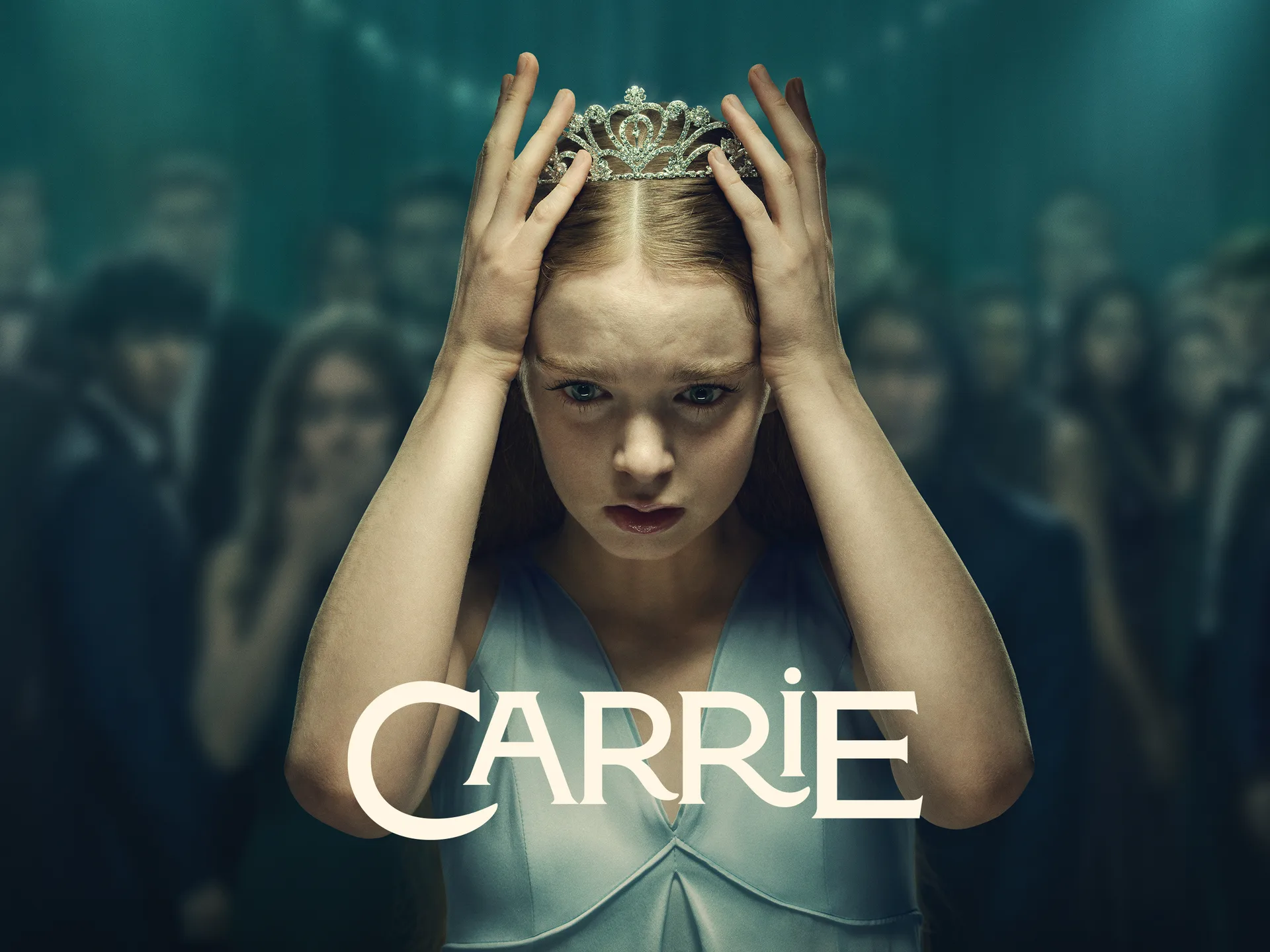
- Carrie TV series ending explained: the finale merges bullying, religious repression, and telekinesis into one tragedy.
- The prom night catastrophe is the climax where public humiliation becomes a supernatural disaster.
- Margaret White's confrontation with Carrie resolves the family-conflict storyline in the final episodes.
- Foreshadowing pays off: early power glitches and emotional buildup directly shape the ending.
- The tone: the finale plays as tragedy first, horror second — accumulated harm, not random violence.
Carrie TV Series Ending Explained: Overview
Mike Flanagan's eight-episode adaptation of Stephen King's Carrie arrived on Prime Video on October 7, 2026, and the ending reframes the familiar prom-night story as a slow-burn tragedy about accumulated harm. The Carrie TV series ending brings together every thread the season carefully built: Carrie White's isolation, Margaret's religious control, the classmates' escalating cruelty, and the telekinetic power that grows alongside Carrie's suppressed rage.
Before the breakdown, watch the official trailer for a refresher on the series' tone and central imagery.
Video Highlights:
- Establishes Carrie White, the school bullying, and the power awakening
- Shows the prom setting that anchors the finale
- Communicates the psychological-horror tone Flanagan uses throughout
Every section below discusses the ending in full detail. If you have not finished all eight episodes on Prime Video, bookmark this page and come back after the finale.
| Story Thread | How It Builds Across the Season | How It Resolves in the Ending |
|---|---|---|
| Carrie's isolation | Withdrawn teen, hostile school, no allies | Isolation removes every protection before the climax |
| Margaret's control | Religious extremism and emotional domination | Final home confrontation reasserts and ends the conflict |
| Classmates' cruelty | Bullying, humiliation, revenge plots | Escalates into the public catastrophe at prom |
| Telekinesis | Confusing glimpses tied to fear and anger | Becomes the defining force of the climax |
The Road to the Ending: What Sets It Up
The ending is prepared by a long pattern of cruelty rather than a single event. The serialized format gives the season room to show how home pressure and school hostility feed each other, leaving Carrie with fewer emotional and social protections each episode.
Home Pressure
- Margaret's religious extremism
- Fear, guilt, and control
- Shapes Carrie's view of herself
School Hostility
- Group bullying and humiliation
- Chris Hargensen's revenge plot
- Sue Snell's attempt at amends
The Growing Power
- Early uncontrolled glitches
- Powers tied to emotion
- Strength grows with repression
Watch for the small telekinetic moments in the first episodes. Each one is calibrated to Carrie's emotional state, so the finale's escalation feels earned rather than sudden.
The Ending, Step by Step
Carrie's Isolation Reaches a Breaking Point
The final movement is driven by pressure accumulated at home and at school. Isolation, fear, and humiliation leave Carrie exposed as the conflict escalates toward the prom.
Telekinesis Becomes the Central Force
Carrie's ability develops from a source of confusion into the defining force of the climax. Her emotional state and her control of the power become inseparable.
The School Conflict Turns Tragic
Humiliation and revenge collide at prom, transforming personal cruelty into public catastrophe. This is the story's major turning point.
The Family Conflict Reasserts Itself
Even after the school events, Margaret remains central. The final confrontation shows how extremism, fear, and parental control made the tragedy possible.
The Ending's Meaning
Powers offer escape from helplessness but no path to safety or belonging. The finale lands as a critique of bullying, repression, and the refusal to see another person's humanity.
Character Fates in the Finale
The ending distributes consequences according to each character's choices across the season. The table below summarizes how each figure's arc lands.
| Character | Role | Finale Outcome | Thematic Function |
|---|---|---|---|
| Carrie White | Protagonist | Her powers erupt fully; the tragedy completes her arc | Repression, power, and the cost of cruelty |
| Margaret White | Mother | Final confrontation with Carrie resolves the home conflict | Oppressive force that enables the tragedy |
| Sue Snell | Classmate | Her attempts at amends connect to the ending's aftermath | Guilt, empathy, and accountability |
| Chris Hargensen | Antagonist | Her deliberate cruelty drives the escalation | Consequences of humiliation and retaliation |
Unlike a conventional monster narrative, the horror in the finale comes from the interaction between social cruelty, emotional repression, domestic control, and telekinetic power — the supernatural is the expression, not the cause.
Themes and Foreshadowing Checklist
Use this checklist on a rewatch to see how the ending's payoffs are seeded early.
Ending Payoffs to Track on a Rewatch:
- Early telekinetic glitches tied to fear and anger
- Margaret's escalating religious rhetoric at home
- The classmates' shift from teasing to targeted humiliation
- Sue Snell's guilt-driven attempts to make amends
- Prom imagery introduced before the event itself
The series format supports a deeper exploration of these threads than a single feature film could, which is the core adaptation advantage of the eight-episode structure on Prime Video.
How the Ending Compares to Other Versions
| Adaptation | Format | Ending Treatment | Best For |
|---|---|---|---|
| 1974 novel | Novel | Documentary-style aftermath broadens the social context | Readers wanting the original structure |
| Carrie (1976) | Film | Condensed, visually driven climactic horror | Classic screen interpretation fans |
| Carrie (2002) | TV film | More exposition, television-drama structure | Viewers wanting a TV-oriented retelling |
| Carrie (2013) | Film | Modernized climax with updated effects | Contemporary film adaptation fans |
| Carrie TV series | Series (8 eps) | Serialized buildup; tragedy emphasized over spectacle | Long-form storytelling fans |
The TV series ending emphasizes sustained tension and gradual character development, framing the finale as tragedy about accumulated harm rather than a single night of horror.
FAQ
Q: What is the Carrie TV series ending explained in one sentence?
The ending brings Carrie's telekinetic powers, the prom-night humiliation, and Margaret's final confrontation together into a tragedy about accumulated bullying, repression, and abuse.
Q: Does Carrie's telekinesis cause the ending, or do the people around her?
The powers are the visible force, but the series frames the ending as the consequence of sustained social cruelty and domestic control. The supernatural reflects what was suppressed.
Q: How does the TV series ending differ from the 1976 film?
The serialized format builds the ending across eight episodes, giving more room to the causes of Carrie's isolation and the aftermath, where the film condenses the arc into a single climax.
Q: Is the ending a horror ending or a tragic one?
Both, but tragedy leads. The finale works as supernatural horror on the surface while functioning as a story about the devastating cost of treating a vulnerable person as an object of humiliation.