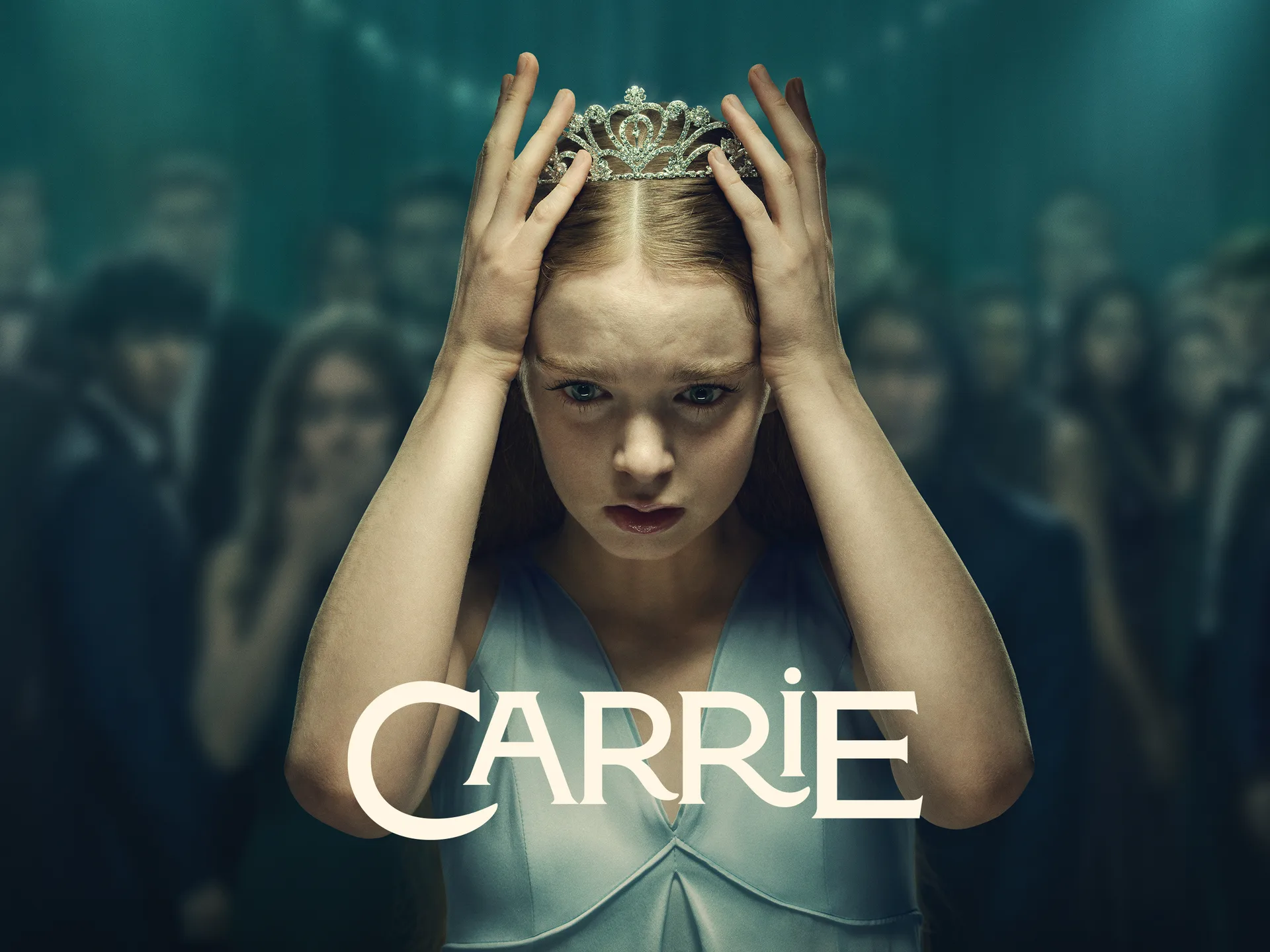
- Carrie TV series vs book: The 8-episode Prime Video series expands King's short 1974 novel into serialized drama.
- Structure: The novel uses documentary-style fragments; the series uses long-form episodic storytelling.
- Characters: Margaret, Sue, and classmates get far more development across eight episodes.
- Themes: Bullying, religious repression, and telekinesis remain central in both versions.
- Best fit: Choose the series for depth, the book for King's original experimental voice.
Carrie TV Series vs Book: Overview of Both Versions
The Carrie TV series vs book comparison starts with scale. Stephen King's 1974 novel is a compact psychological horror story, told in roughly 200 pages through an experimental mix of narrative, fake news clippings, and academic excerpts. The television series, developed by Mike Flanagan for Prime Video and released on October 7, 2026, stretches that same story across 8 episodes, giving the town of Chamberlain, its students, and the White household room to breathe.
The core premise is identical in both: Carrie White, a socially isolated teenager with a fanatically religious mother, discovers telekinetic abilities as bullying and domestic control push her toward a catastrophic breaking point.
| Aspect | 1974 Novel | 2026 TV Series |
|---|---|---|
| Format | Novel, ~200 pages | 8-episode streaming series |
| Creator | Stephen King | Mike Flanagan (developer) |
| Structure | Epistolary fragments, news clips, court records | Serialized hour-long drama |
| Pacing | Compressed, single escalating arc | Gradual build, expanded subplots |
| POV | Multiple viewpoints plus "documents" | Character-driven ensemble scenes |
If you plan to experience both, read the novel first. It is short, and knowing its structure helps you notice exactly what the series expands, reorders, or reinterprets.
Story Structure and Pacing Differences
King's novel is famous for its documentary conceit: excerpts from books, newspaper articles, and commission hearings interrupt the main narrative, foreshadowing disaster and widening the social lens. The series cannot easily replicate this device, so it replaces it with something television does well — time.
Where the book races toward the prom-night catastrophe, the series can linger on individual school days, family dinners, and the slow accumulation of small cruelties. Flanagan's known approach to horror favors exactly this kind of slow-building, character-first tension over jump scares.
Novel Structure
- Epistolary framing with fictional documents
- Fast compression toward climax
- Reader assembles the tragedy from fragments
Series Structure
- Serialized 8-episode arc
- Extended character backstories
- Sustained dread across multiple hours
Shared Spine
- Bullying, prom, and the blood
- Margaret White's religious control
- Telekinesis tied to repression
A two-hour film adaptation must condense; an eight-episode series can show the pattern of cruelty rather than just its peak moments, which shifts the story's emotional weight.
Character Depth: Who Benefits Most from the Series
The clearest winner in the Carrie TV series vs book comparison is the supporting cast. In the novel, characters like Sue Snell, Chris Hargensen, and even Margaret White are sketched efficiently but briefly. Television demands sustained scenes, so each figure gains interiority.
| Character | In the Novel | In the Series |
|---|---|---|
| Carrie White | Inner life told partly through documents | Expanded screen time, gradual power awakening |
| Margaret White | Terrifying but economically drawn | More screen presence, deeper abuse dynamics |
| Sue Snell | Guilt-driven classmate, key POV | Fuller arc of empathy and amends |
| Chris Hargensen | Deliberate antagonist | Escalating cruelty with clearer motive |
| Teachers/adults | Minor figures | Community-level institutional perspective |
Deeper character development means the series reveals motivations and backstories the novel only implies. If spoiler sensitivity matters to you, watch before reading detailed episode analyses.
Telekinesis and Horror Expression
Both versions anchor the supernatural in emotion: Carrie's power grows with fear, anger, and repression. The difference is visual language. King describes telekinesis through prose and after-the-fact reports, which creates dread through implication. The series renders it on screen, where Flanagan's style favors psychological buildup over spectacle.
Confusion Stage
Carrie experiences small, unexplained events she cannot control or understand, mirroring the novel's early incidents.
Connection Stage
The series explicitly links emotional pressure — humiliation at school, fear at home — to the strength of her abilities.
Escalation Stage
As social conflict intensifies, tests of the power become deliberate, building sustained tension across episodes.
Catastrophe Stage
The climax fuses the supernatural and social conflicts into the tragedy both versions build toward.
Neither version "wins" outright. The novel's horror is forensic and inevitable; the series' horror is intimate and immersive. Fans of slow-burn dread tend to favor the series treatment.
Which Version Should You Choose?
Use this checklist to decide your entry point into Carrie's story, then explore the Prime Video series page or Stephen King's official Carrie page for more.
Choose the Version That Fits You:
- Read the novel first if you want the original experimental structure
- Watch the series if you prefer long-form character-driven horror
- Compare both if you study adaptation theory or King's legacy
- Skip older films if you only want the fullest version of the story
| Viewer Type | Recommended Version | Why |
|---|---|---|
| Stephen King newcomers | Novel | Short, accessible, foundational |
| Horror series fans | TV series | 8 episodes of sustained tension |
| Adaptation completists | Both plus films | Full picture of every interpretation |
| Casual viewers | TV series | Easier entry, modern production |
Read the book, watch the 2026 series, then revisit earlier film adaptations to see how each era reshaped the same tragedy.
FAQ
Q: Is the Carrie TV series a direct adaptation of the book?
It is a television adaptation of Stephen King's 1974 novel, retaining the core premise of Carrie White, her mother Margaret, school bullying, and telekinesis, while expanding the story across eight episodes for serialized storytelling.
Q: Does the TV series follow the book's ending?
The series keeps the central tragedy of the novel intact — the collision of humiliation, family abuse, and supernatural power — but the extended format allows more time for consequences and aftermath than the compressed novel structure.
Q: What is the biggest difference between the Carrie TV series vs book?
Structure. The novel uses documentary-style fragments and multiple viewpoints in a compact format, while the series uses long-form episodes to develop characters, the community, and the slow escalation of cruelty in much greater depth.
Q: Do I need to read the book before watching the series?
No. The series stands on its own, but reading the novel first helps you appreciate which story elements were expanded or reinterpreted in Mike Flanagan's adaptation.